
Article · 6 minute read
Can Cork Flooring Be Used in Bathrooms? An Australian Specifier's Guide
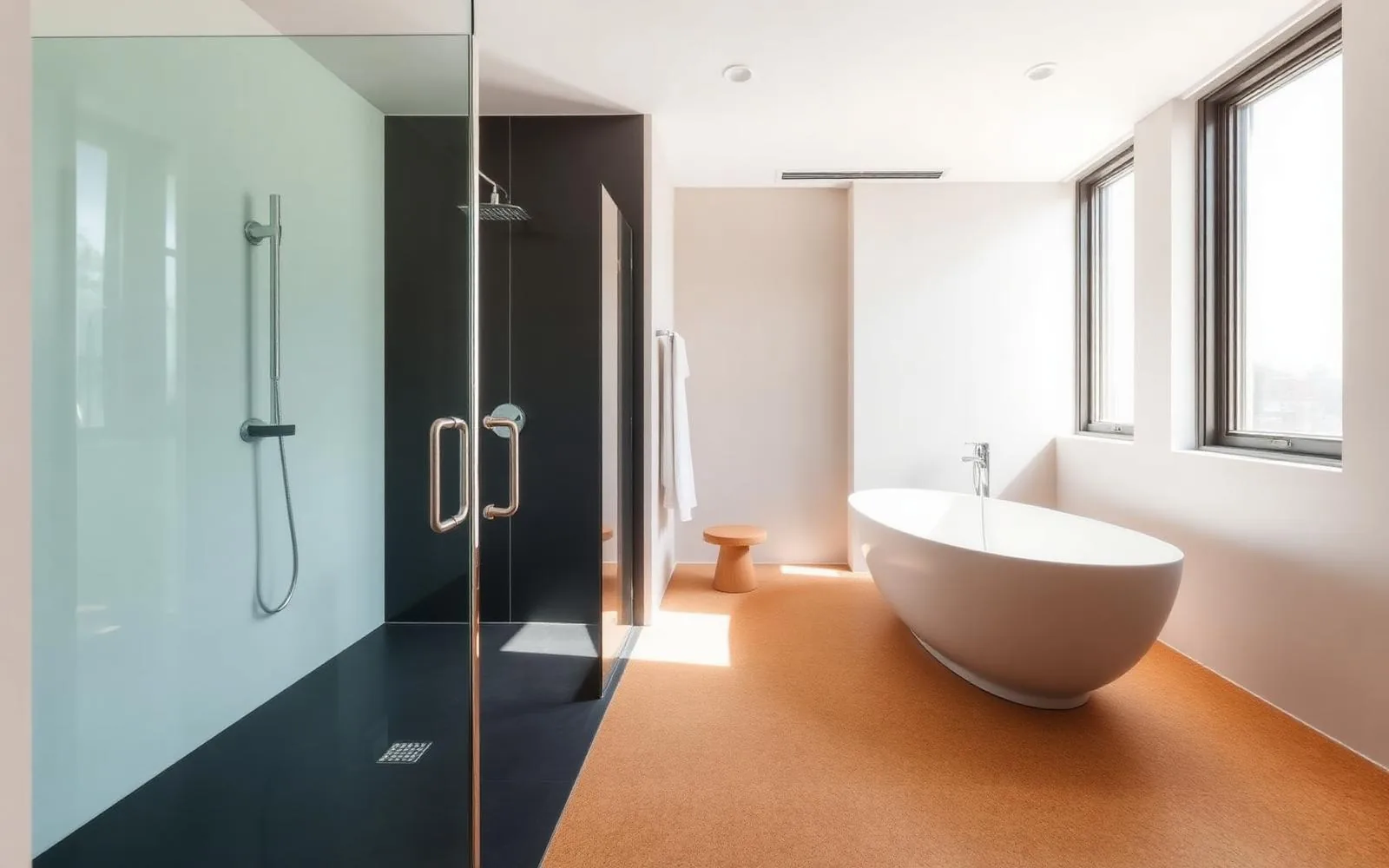
Cork flooring in bathrooms used to mean glued tiles that lifted within a few years. Modern cork-rubber composites like Comcork are a different product entirely: slip-rated to P5 wet, and supplied as sheet with cold-welded chemical seams. In wet areas Comcork is generally left unsealed (the manufacturer recommends not sealing where maximum slip resistance is required, since topical sealing reduces wet anti-slip performance). Specified correctly, it outperforms vinyl on comfort and acoustics while matching it on water management.
The short answer: yes, with the right profile
Two things have to be true for cork flooring to work in a bathroom or wet area: the surface has to be slip-resistant when wet, and the installation has to keep water out of the seams. Both are solvable.
Specify the Comcork Textured profile in sheet form. It carries a P5 wet slip rating under AS 4586 - the highest classification, suitable for communal showers, accessible bathrooms, and pool surrounds. Cold-welded chemical seams and a coved skirting detail give you a continuous surface from floor to wall.
How the waterproofing actually works
The Comcork surface naturally repels short-term water exposure, and in wet areas the manufacturer specifies the floor is left unsealed so wet anti-slip performance is not compromised. The vulnerability in any sheet floor is at the joints - and that's why bathroom installs use cold-welded chemical seams (the manufacturer states thermoplastic heat welding is not suitable for Comcork). A specialist installer routes a small channel along each seam, then runs a chemical seam sealer into it that fuses the two adjoining sheet edges. The result is one continuous sheet with no break for water to track through.
Cove the floor up the wall by 100 mm and you've created a waterproof tray. This is the same approach used for vinyl safety flooring in hospitals, just with a more comfortable surface.
Comfort and acoustic benefits
Bathrooms tiled in ceramic or porcelain are loud. Every dropped item, every footstep, every cabinet door amplifies. Cork-rubber dampens all of it - Comcork delivers 19 dB of impact sound reduction. In apartments, hotels, and aged care, that's the difference between bathroom noise carrying through floors and being absorbed at source.
Cork is also warm underfoot. Stepping out of a shower onto cork is meaningfully more comfortable than stepping onto stone or tile, particularly in winter.
Where it doesn't fit
Sheet Comcork with cold-welded chemical seams is the right specification for any wet area, and is generally left unsealed there to preserve wet slip resistance. Tile-format cork is fine for powder rooms and ensuites where standing water exposure is low, but should not be used in showers or main bathroom floors.
Frequently asked
Frequently asked questions
Is cork flooring waterproof?
Comcork in sheet form with cold-welded chemical seams and coved skirtings forms a continuous water-managing surface suitable for wet areas. Note: thermoplastic heat welding is not suitable for Comcork - the manufacturer specifies cold (chemical) seam welding. Tile-format cork is water-resistant but not waterproof.
What slip rating do I need for a bathroom in Australia?
Australian Standards recommend a minimum P3 wet for general bathroom areas and P4–P5 for showers and accessible facilities. The Comcork Textured profile achieves P5 wet under AS 4586. The manufacturer recommends not sealing the floor in wet areas, because topical sealing reduces wet anti-slip performance.
Can cork flooring be installed in a shower?
Yes, with the Textured profile in cold-welded sheet form, coved up the walls and left unsealed to maintain P5 wet slip resistance. This detail is established practice for commercial shower facilities, gyms, and aged care wet areas.
Will cork flooring rot if water gets underneath?
Cork is naturally rot-resistant - it contains suberin, a waxy substance that resists water and microbes. Combined with rubber and cold-welded seams that block water tracking through joints, it tolerates moisture better than timber or laminate.
Who installs waterproof cork flooring in Australia?
Premrest is a specialist commercial flooring contractor that supplies and installs Comcork wet-area systems across Melbourne, Sydney, Brisbane, and the rest of Australia.
Want Comcork on your floor? We’ll supply and install it.
Comcork is supplied and installed by Premrest, a commercial flooring contractor working across Melbourne, Sydney, Brisbane and the rest of Australia. We also supply and install commercial vinyl, rubber, carpet tile, polished concrete and resin systems.
More reading
Other Comcork articles
Cork Flooring for Aged Care
How cork & rubber flooring like Comcork performs in Australian aged care: slip resistance, acoustics, fall impact, infection control vs vinyl.
How to Clean Comcork Flooring
How to clean and maintain Comcork cork-rubber flooring - pH-neutral mopping, CRB and orbital deep-clean methods, and when to strip and reseal.
Cork Flooring Over Tiles
Installing cork flooring over existing tile: when it works, when it doesn't, and the substrate prep that determines whether the install lasts 10 years or 2.
Are Cork Floors Durable?
Cork flooring is more durable than people expect. Indentation, abrasion, rolling load, and the test data behind Comcork's 10-year commercial warranty.
Cork vs Vinyl vs Rubber
How cork-rubber composite flooring compares to commercial vinyl and pure rubber across slip resistance, acoustics, comfort, sustainability, and lifecycle cost.
Cork Flooring Cost per m² Australia 2026
Cork flooring cost per m² in Australia: Comcork cork-rubber (cork and rubber mix) supply and installation pricing for Melbourne, Sydney, and Brisbane projects.
Cork Flooring Melbourne, Sydney, Brisbane
Australian-made cork & rubber flooring supplied and installed by Premrest across Melbourne, Sydney, and Brisbane. Commercial fitouts, refurbs, and residential.
Cork Flooring for Strata
Why cork-rubber flooring like Comcork suits strata apartments: impact-isolation, BCA acoustic compliance, comfort, and what owners' corporations need to know.
Cork Flooring for End of Trip
Why cork-rubber flooring suits end of trip facilities: acoustic performance, durability under bike traffic, slip resistance in wet areas, and Australian manufacturing.
Let’s talk floors.
Tell us about your site and we’ll take it from there: a site visit, samples and a fixed price to supply and install Comcork.