
Article · 6 minute read
Can You Install Cork Flooring Over Tiles? A Contractor's Guide
Tearing out existing tile is expensive, dusty, and slow. The good news: cork flooring can usually be installed directly over sound, level ceramic or porcelain tile - provided the substrate prep is done properly. Skip the prep and you'll see the grout lines telegraphing through within a year.
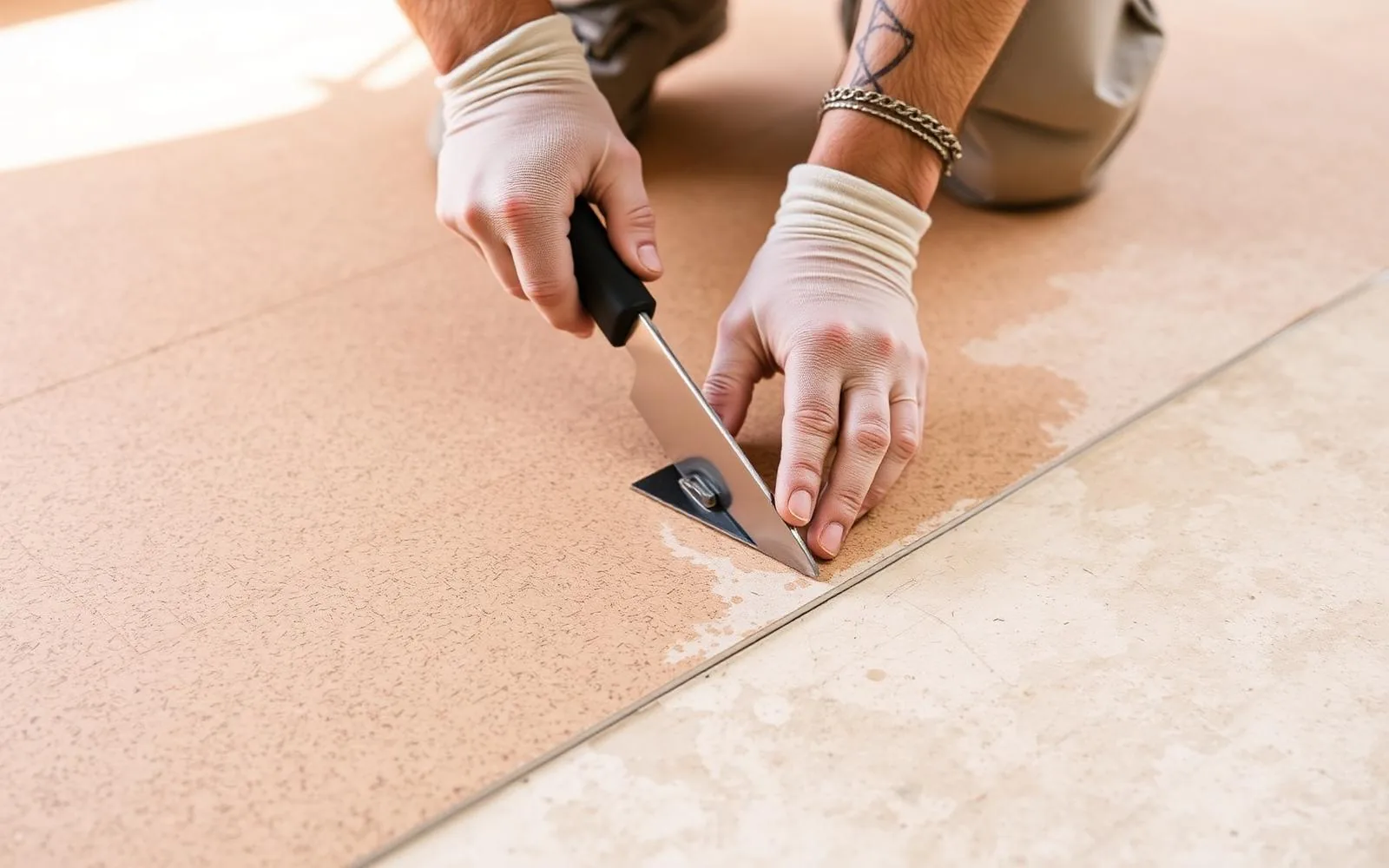
When you can install cork over tile
- Tiles are firmly bonded to the substrate (no hollow sounds when tapped).
- No more than 5 percent of tiles are cracked, lifted, or missing.
- Floor is structurally level to within manufacturer tolerances (typically 3 mm over 3 m).
- Moisture content of the slab below is within spec - the manufacturer specifies relative humidity not exceeding 75% (ASTM F2170).
- Total floor build-up will still clear doors and transitions.
When you can't
Tiles that are drumming, lifting, or covering an unknown substrate are a no. Same for floors with active moisture issues, severe lippage, or polished finishes that won't accept an adhesive. In those cases the existing tile has to come up first.
The substrate prep that makes the difference
Comcork is thinner than people expect - supplied in 2.5, 3.5, and 4.5 mm. Anything happening underneath will telegraph through. The non-negotiable prep steps:
- Mechanical clean of the tile surface - grind off any sealer or polish.
- Self-levelling compound poured across the full floor to fill grout lines and even out lippage.
- Moisture test of the slab below; epoxy DPM applied if readings exceed threshold.
- Final levelness check before adhesive goes down.
Cutting any of these corners is what causes the grout-line telegraphing visible on cheap installs. Comcork laid over a properly prepped tile substrate looks identical to one laid on a fresh slab. Premrest follows the manufacturer's installation specification - Mapei Ultrabond Eco VS90 Plus acrylic adhesive (dry interior areas) or Mapei Adesilex G19 two-part epoxy-polyurethane adhesive (wet interior or exterior areas), spread with a 1.6 mm V-notched trowel as required by the Comcork Installation Instructions.
Cost vs tearing out
Self-levelling compound and prep typically adds 15–25 percent to the installed cost. Tearing out tile, disposing of the waste, and re-screeding usually adds 60–100 percent and a week to the program. For most renovations in Melbourne, Sydney, and Brisbane, installing over the tile wins on both budget and timeline - provided the existing tile is sound.
Frequently asked
Frequently asked questions
Can you install cork flooring over ceramic tile?
Yes, if the tile is well-bonded, intact, and the floor is properly prepped with a self-levelling compound to fill grout lines and even out lippage.
Will the tile grout lines show through cork flooring?
Only if the substrate isn't levelled first. A self-levelling compound poured across the full floor before installation prevents any telegraphing.
Does cork flooring need underlay over tile?
No separate underlay is needed for Comcork - the cork-rubber composition is the underlay. The product goes directly onto a prepped substrate using the manufacturer's approved adhesives (Mapei Ultrabond Eco VS90 Plus or Mapei Adesilex G19) applied with a 1.6 mm V-notched trowel.
How thick is Comcork flooring?
Comcork is supplied in 2.5 mm, 3.5 mm, and 4.5 mm thicknesses. Specification depends on the substrate, application, and acoustic requirements - confirmed at quoting.
Can the existing tile cause moisture problems?
Tile itself is inert, but it can hide a slab that's gaining moisture. Always moisture-test the substrate before installing any resilient flooring; apply an epoxy moisture barrier if readings exceed the manufacturer threshold.
Want Comcork on your floor? We’ll supply and install it.
Comcork is supplied and installed by Premrest, a commercial flooring contractor working across Melbourne, Sydney, Brisbane and the rest of Australia. We also supply and install commercial vinyl, rubber, carpet tile, polished concrete and resin systems.
More reading
Other Comcork articles
Cork Flooring for Aged Care
How cork & rubber flooring like Comcork performs in Australian aged care: slip resistance, acoustics, fall impact, infection control vs vinyl.
How to Clean Comcork Flooring
How to clean and maintain Comcork cork-rubber flooring - pH-neutral mopping, CRB and orbital deep-clean methods, and when to strip and reseal.
Cork Flooring in Bathrooms
Yes - cork & rubber flooring works in bathrooms when specified correctly. Slip ratings, waterproofing details, and the right Comcork profile to choose.
Are Cork Floors Durable?
Cork flooring is more durable than people expect. Indentation, abrasion, rolling load, and the test data behind Comcork's 10-year commercial warranty.
Cork vs Vinyl vs Rubber
How cork-rubber composite flooring compares to commercial vinyl and pure rubber across slip resistance, acoustics, comfort, sustainability, and lifecycle cost.
Cork Flooring Cost per m² Australia 2026
Cork flooring cost per m² in Australia: Comcork cork-rubber (cork and rubber mix) supply and installation pricing for Melbourne, Sydney, and Brisbane projects.
Cork Flooring Melbourne, Sydney, Brisbane
Australian-made cork & rubber flooring supplied and installed by Premrest across Melbourne, Sydney, and Brisbane. Commercial fitouts, refurbs, and residential.
Cork Flooring for Strata
Why cork-rubber flooring like Comcork suits strata apartments: impact-isolation, BCA acoustic compliance, comfort, and what owners' corporations need to know.
Cork Flooring for End of Trip
Why cork-rubber flooring suits end of trip facilities: acoustic performance, durability under bike traffic, slip resistance in wet areas, and Australian manufacturing.
Let’s talk floors.
Tell us about your site and we’ll take it from there: a site visit, samples and a fixed price to supply and install Comcork.