
Article · 7 minute read
How to Clean Comcork Cork Flooring: Premrest's Practical Care Guide
Comcork is a commercial cork-rubber floor that is sealed on site with a polyurethane finish after installation. Premrest supplies, installs, and seals Comcork across Melbourne, Sydney, and Brisbane. This guide is specifically about caring for Comcork - the routines, machines, and products we recommend to keep it looking and performing as installed.
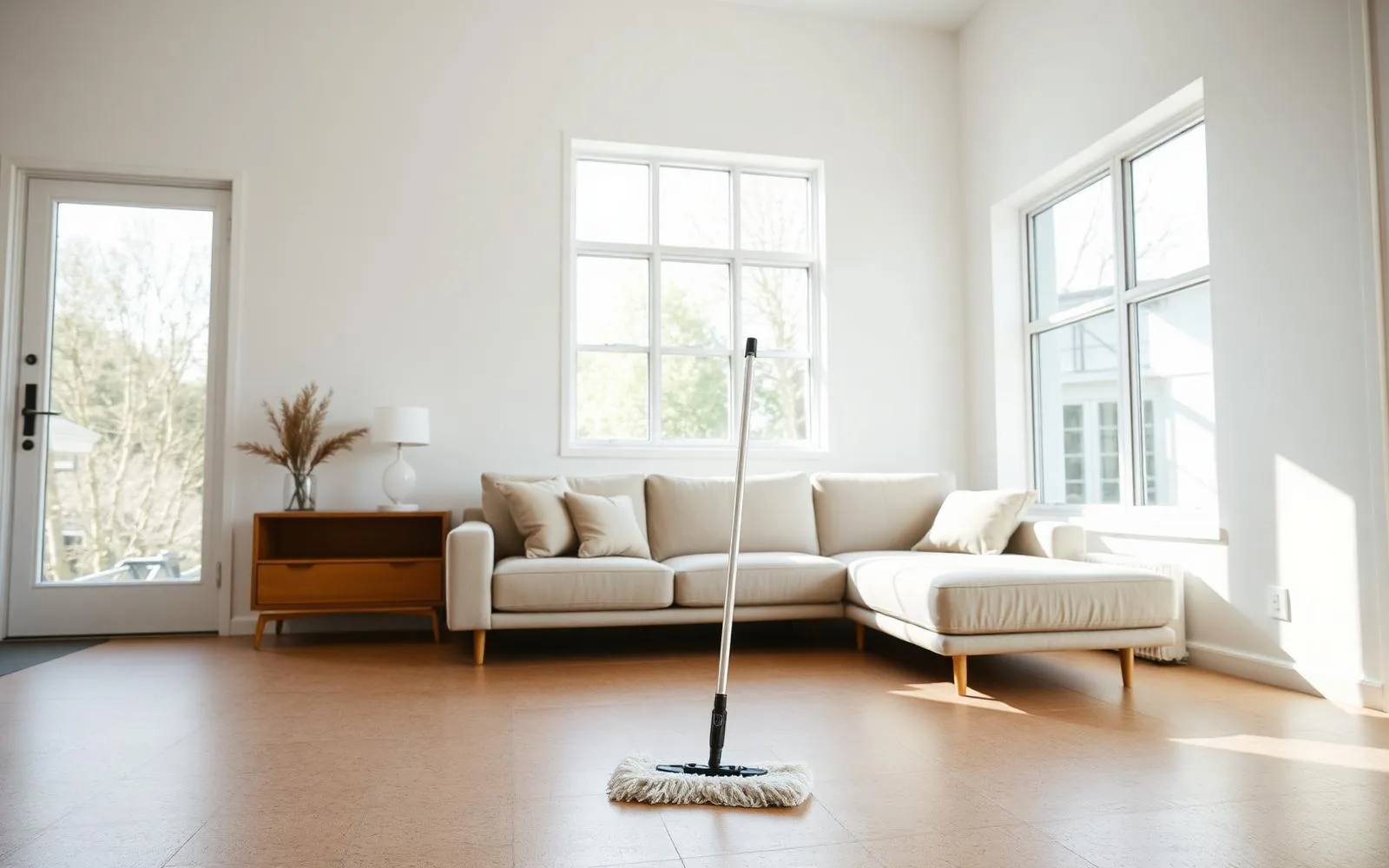
Daily and weekly cleaning
Once Comcork is installed and sealed on site with polyurethane, the surface is non-porous, so the day-to-day job is mostly keeping grit off the floor. Grit is what wears any commercial floor over time, not water or cleaning product.
- Sweep, dust mop, or vacuum (hard-floor setting, no beater bar) daily in trafficked areas.
- Damp mop with a pH-neutral floor cleaner - Premrest specifically recommends pH-neutral for all regular Comcork mopping.
- Wring the mop out well. Comcork tolerates short exposure to liquid, but the floor should never be flooded - control your water.
- Wipe spills as they happen rather than letting them sit on the surface.
Comcork maintenance schedule at a glance
Use this simple schedule as a baseline for any commercial Comcork installation. Residential homes can scale frequencies back to suit how the space is actually used.
- Daily
- Sweep, dust mop, or vacuum trafficked areas (hard-floor setting, no beater bar). Wipe spills as they happen. Check entry mats are doing their job.
- Weekly
- Damp mop the whole floor with a pH-neutral cleaner using a well-wrung microfibre mop. Spot-clean scuffs and sticky marks.
- Monthly
- Walk the floor and look for dulling, scratches, edge lift, or seam wear. Refresh entry matting. Top up training so cleaning crews are still using neutral-pH product and controlled water.
- Quarterly (commercial) / annually (residential)
- Periodic deep clean with a CRB (counter rotating brush) machine or a walk-behind orbital scrubber with a red or similar non-aggressive pad. Keep solution volumes low - never flood the floor.
- Every few years
- Strip and reseal with Dr. Schutz two-part polyurethane sealer or Peerless Jal Hy-Shield matte finish, applied on site by Premrest. Trigger is wear or persistent difficulty getting the floor clean.
What to use - and what to avoid
Stick to neutral-pH cleaners. Strongly alkaline or acidic products will dull the polyurethane top coat over time. Standard commercial neutral-pH floor cleaners rated for vinyl, rubber, or polyurethane-finished timber are all suitable for Comcork.
- Use
- pH-neutral floor cleaners, microfibre mops, soft-bristle vacuums, felt pads under furniture, walk-off mats at entries, and well-wrung mops with controlled water.
- Avoid
- Bleach, ammonia, undiluted vinegar, abrasive scouring pads, steam mops, wax or oil polishes, and any flooding of the surface - none are compatible with a polyurethane-sealed cork-rubber floor.
Periodic deep cleaning with a CRB or orbital scrubber
For a periodic deeper clean on commercial Comcork installations, Premrest recommends mechanical agitation rather than wet scrubbing. The two methods we specify are a CRB (counter rotating brush) machine, or a walk-behind orbital scrubber fitted with a red pad (or similar non-aggressive pad).
- CRB machines lift embedded soil out of the surface texture without driving water into seams - ideal for healthcare, aged care, and education environments.
- Walk-behind orbital scrubbers with a red or similar pad work well in larger commercial spaces and agree well with the Comcork finish.
- Whichever method is used, the floor must not be flooded. Keep solution volumes low and recover water promptly.
Avoid aggressive pads (black, brown, high-cut diamond) and high-pressure water - they will cut into the polyurethane and shorten the time between reseals.
Resealing Comcork - when and why
Comcork does require resealing every few years in commercial environments. In residential installations it may never need resealing - it depends on the wear, the location, and how the floor is used.
A simple rule of thumb: if the floor is becoming noticeably hard to keep clean, or you can no longer get it looking clean even after a proper mop or deep clean, that is a sign the sealer has worn through and the floor needs stripping and resealing. Once stripped and resealed, Comcork looks brand new again.
Premrest seals Comcork on site using one of two specified products: Dr. Schutz two-part polyurethane sealer, or Peerless Jal Hy-Shield matte finish. Both are commercial-grade systems chosen for durability, chemical resistance, and a finish appropriate to a cork-rubber surface - the choice depends on the project, the environment, and the look the specifier is after.
Premrest offers strip-and-reseal as part of a maintenance contract for commercial Comcork installations across Melbourne, Sydney, and Brisbane. Done at the right time, it costs a fraction of replacing a floor that has been allowed to wear through to the cork-rubber substrate.
Book a Premrest strip-and-reseal inspection
If your Comcork floor is starting to look tired, or your cleaning team is telling you it is becoming hard to keep clean, that is the right moment to act - not after the sealer has worn through to the cork-rubber substrate.
Premrest offers on-site strip-and-reseal inspections for commercial Comcork installations in Melbourne, Sydney, and Brisbane. We assess wear, identify any patch-repair work, recommend Dr. Schutz two-part polyurethane or Peerless Jal Hy-Shield matte depending on the environment, and quote the works.
Request an inspection through the Premrest contact form at premrest.com.au, or use the contact section at the bottom of this page and we'll get the right person in touch.
Removing scuffs, marks and stains
- Black scuffs from rubber soles: a damp microfibre cloth with a drop of pH-neutral cleaner.
- Sticky residue: warm water with neutral cleaner, then dry immediately.
- Light surface dulling: usually resolved at the next CRB or orbital deep clean.
- Deep gouges or worn-through areas: patch repair from reserve stock - Premrest can colour-match from the original install batch.
Frequently asked
Frequently asked questions
What cleaner does Premrest recommend for Comcork?
A pH-neutral floor cleaner for all regular mopping. Neutral-pH products rated for vinyl, rubber, or polyurethane-finished timber are all suitable. Avoid bleach, ammonia, and undiluted vinegar - they degrade the polyurethane top coat.
Can you mop Comcork floors?
Yes - damp mop with a wrung-out microfibre mop and a pH-neutral cleaner. Don't flood the floor and don't use a steam mop. Controlled water is the rule.
What machine should be used to deep clean Comcork?
Premrest recommends a CRB (counter rotating brush) machine, or a walk-behind orbital scrubber with a red or similar non-aggressive pad. Keep solution volumes low so the floor is never flooded.
How often does Comcork need resealing?
Commercial Comcork installations typically need resealing every few years depending on traffic. Residential installations may never need resealing - it depends on wear and location. The trigger is when the floor becomes noticeably hard to keep clean.
What happens when Comcork is stripped and resealed?
The worn polyurethane is removed, the floor is cleaned, and fresh coats of finish are applied. Once stripped and resealed, Comcork looks brand new again and is ready for another service cycle.
Can you use a steam mop on Comcork?
No. Steam can soften the polyurethane finish and force moisture into seams. Damp mopping with a wrung-out microfibre mop and a pH-neutral cleaner is the correct method.
Want Comcork on your floor? We’ll supply and install it.
Comcork is supplied and installed by Premrest, a commercial flooring contractor working across Melbourne, Sydney, Brisbane and the rest of Australia. We also supply and install commercial vinyl, rubber, carpet tile, polished concrete and resin systems.
More reading
Other Comcork articles
Cork Flooring for Aged Care
How cork & rubber flooring like Comcork performs in Australian aged care: slip resistance, acoustics, fall impact, infection control vs vinyl.
Cork Flooring in Bathrooms
Yes - cork & rubber flooring works in bathrooms when specified correctly. Slip ratings, waterproofing details, and the right Comcork profile to choose.
Cork Flooring Over Tiles
Installing cork flooring over existing tile: when it works, when it doesn't, and the substrate prep that determines whether the install lasts 10 years or 2.
Are Cork Floors Durable?
Cork flooring is more durable than people expect. Indentation, abrasion, rolling load, and the test data behind Comcork's 10-year commercial warranty.
Cork vs Vinyl vs Rubber
How cork-rubber composite flooring compares to commercial vinyl and pure rubber across slip resistance, acoustics, comfort, sustainability, and lifecycle cost.
Cork Flooring Cost per m² Australia 2026
Cork flooring cost per m² in Australia: Comcork cork-rubber (cork and rubber mix) supply and installation pricing for Melbourne, Sydney, and Brisbane projects.
Cork Flooring Melbourne, Sydney, Brisbane
Australian-made cork & rubber flooring supplied and installed by Premrest across Melbourne, Sydney, and Brisbane. Commercial fitouts, refurbs, and residential.
Cork Flooring for Strata
Why cork-rubber flooring like Comcork suits strata apartments: impact-isolation, BCA acoustic compliance, comfort, and what owners' corporations need to know.
Cork Flooring for End of Trip
Why cork-rubber flooring suits end of trip facilities: acoustic performance, durability under bike traffic, slip resistance in wet areas, and Australian manufacturing.
Let’s talk floors.
Tell us about your site and we’ll take it from there: a site visit, samples and a fixed price to supply and install Comcork.